Why Projects Actually Fall Apart (Spoiler: It’s Not Laziness)
Projects usually don’t crash because everyone’s incompetent. They crash because nobody knows what the hell is going on.
Seriously. I’ve seen it too many times. Teams go radio silent because they’re afraid of looking bad. Managers keep blockers to themselves like they're state secrets. Stakeholders get some polished little slideshow while everything behind the scenes is on fire and held together with duct tape and late-night panic.
People think staying quiet will buy time. It doesn’t. It just buys you a bigger mess to explain later.
People Can Handle Bad News. What They Hate Is Getting Blindsided.
Nobody likes surprises. Finding out something slipped is annoying. Finding out way too late that something slipped and now it’s unfixable? That’s how you earn the slow, disappointed sigh that haunts your dreams.
Most folks would rather hear, “This is late, here’s why,” than get ghosted until delivery day.

Gantt Charts: Pretty. Pointless.
One person I coached once built this immaculate Gantt chart. Perfect timeline. Every task mapped out. It looked like it belonged in a museum—because that’s where it went to die.
Reality doesn’t care about pretty charts. Priorities shift. People quit. Dependencies collapse like Jenga towers. And the plan? It just hangs there on the wall like a sad painting of what could’ve been.
Trying to look in control is pointless. Just show what’s actually happening. If something’s stuck, say so. If there’s risk, raise it before it explodes. People can’t help if you’re hiding the problem behind PowerPoint slides and crossed fingers.
How to Stop Being a Mushroom (Kept in the Dark, Fed BS)
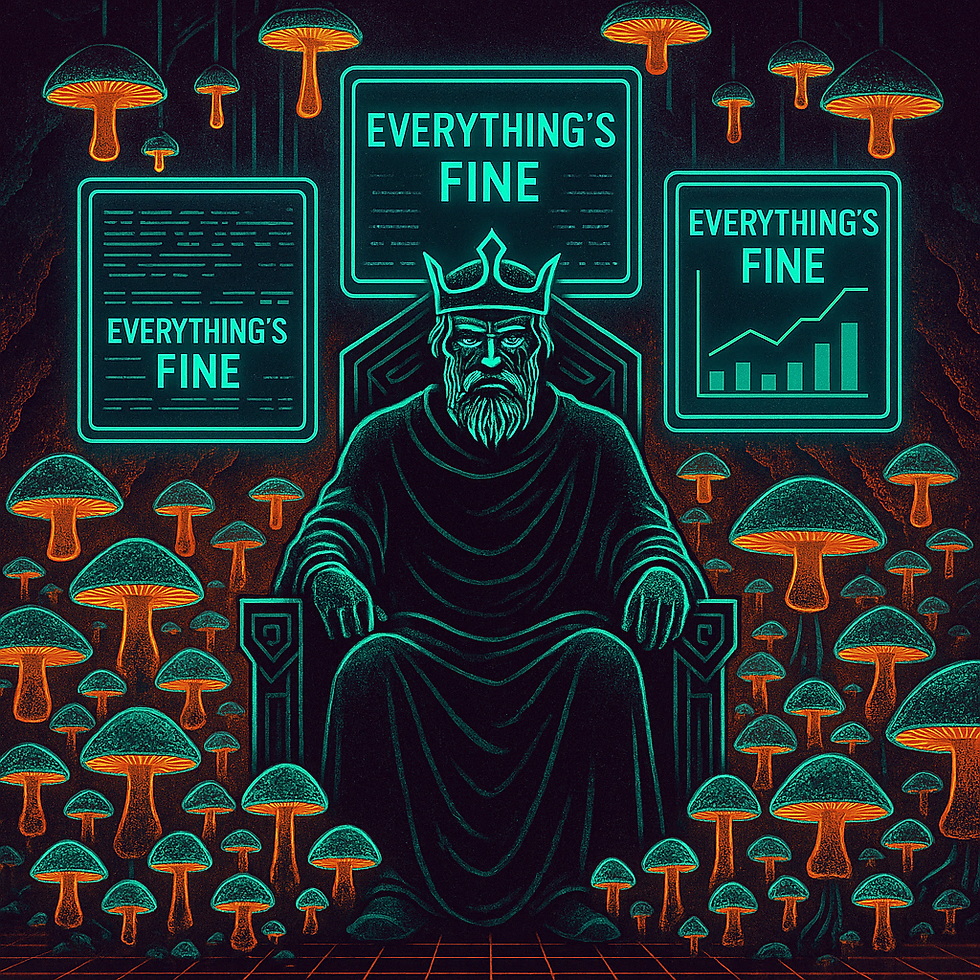
You don’t need to be Gandalf. You just need to do a few basic things:
Make the work visible. Not buried in some weird tool no one opens. Just show what’s moving and what’s stuck. Plain and simple.
Have real check-ins. If your team says “everything’s fine” every week and you believe them, start to dig into them. Create space for people to be honest without getting roasted.
Make honesty safe. If telling the truth gets people punished, they’ll stop doing it. Shocking, I know.
This Starts With You
If your instinct is to bury problems until they’re too obvious to ignore, congrats—you’ve trained your team to do the same. Every time you clean up a messy update just to make it look “clean,” you’re not protecting trust. You’re just faking it.

And faking it doesn’t ship anything.
So, what’s it gonna be? You gonna be the person yelling “Everything’s fine!” while the project falls into the abyss? Or the one who speaks up early and actually gives people a shot at fixing things?


Mr Aleksander, Could it be that too much openness too soon can lead to overreacting, paralyzing decision-making, and undermining confidence? In these cases, isn’t there value in strategically withholding certain information until the situation is clearer? Best regards